Why late payments are a mental health matter
If you’re a business owner, you won’t be surprised to see the scale of the impact of late payments on small businesses, nor the frequency at which they’re experienced, along with the knock-on effect to both cash flow and business sustainability.
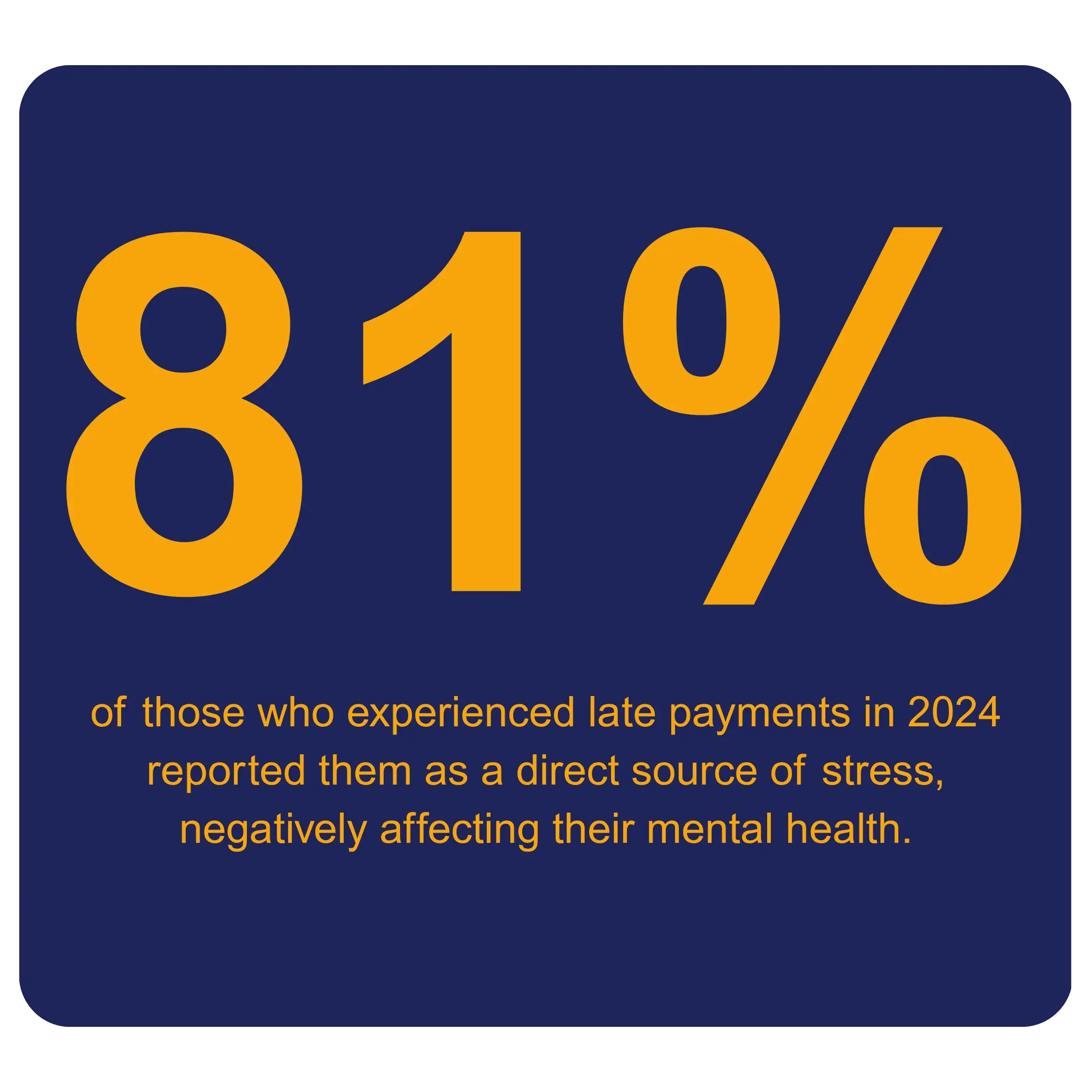
But a conversation that happens less frequently is the emotional impact that late paid invoices also have on those individuals facing the challenge, along with the impact it has to our mental health, which in turn has further impact on our business itself: 81% of those who experienced late payments it during 2024 reported it as a direct source of stress, negatively affecting their mental health.
For the last decade, I’ve been working with many small business owners and freelancers, asking a simple question “how are you doing?” – and turning the answers we get back into an annual report and resources on the topic of mental health in self-employment.
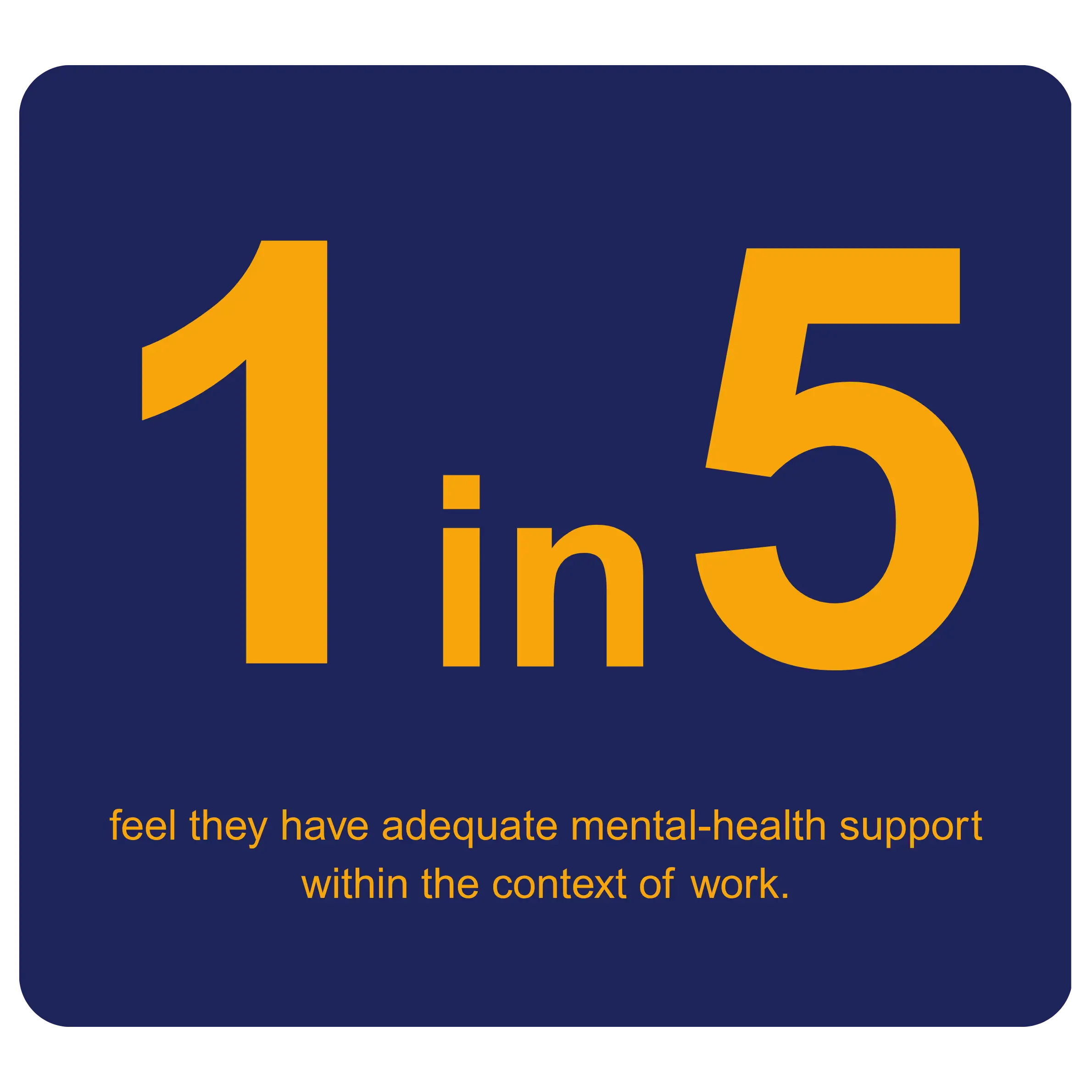
The data we uncover each year might not be of a shock – all too common themes like irregularity of income, feelings of isolation and not being able to “step away” from work can all negatively impact our mental health, and most worryingly, only 1 in 5 feel they have adequate support for their mental health within the context of work. Despite these challenges, 54% of our group still said that working for themselves is still better for their mental health than employment – so there’s still a great deal of benefit in building something for yourself: more control, more flexibility and more opportunity to work in a way that best suits your needs.
However, no matter how much control and flexibility self-employment offers us – many behaviours are often outside of our control, and issues like late payments continue to be one of those frustrating experiences that can happen, no matter how many processes or safeguarding we put in place.
Late payments don’t just hit the bank balance – they create additional workloads for business owners, adding to the todo-list and getting in the way of being able to shut the computer down at the end of the day; they create conflict and tension when we’re having to chase up and feeling awkward when we’re asking for what we’re owed, worrying that it might damage our relationship with our client; they hit our confidence and identity – making us second guess if we did something wrong or if we deserve to get paid; and they hit our anxiety – creating sleepless nights, worrying if the payment will come through, or having to find other ways to cover our costs and bills.
And it’s never just late payments which chip away at our mental health. Lots of small things can build up to create an impact which perhaps leads to a poorer night’s sleep, a little less time to focus on a client project, a little less confidence so we might charge less next time, or a little more likely to not take a day off to rest, pushing through where we shouldn’t.
As mental health and physical health are intertwined, those little impacts can compound – and in the most extreme of circumstances, lead to us being unable to work due to stress or poor health. And we all know there’s no such thing as a paid sick day when you’re self-employed.
That’s why we, as small business owners, need to put things in place to protect our own wellbeing, so we’re more resilient to the challenges thrown our way.
Having a strategy to protect our mental health is often the missing page in our business continuity plan. The first step is simply asking yourself “How am I doing?”.
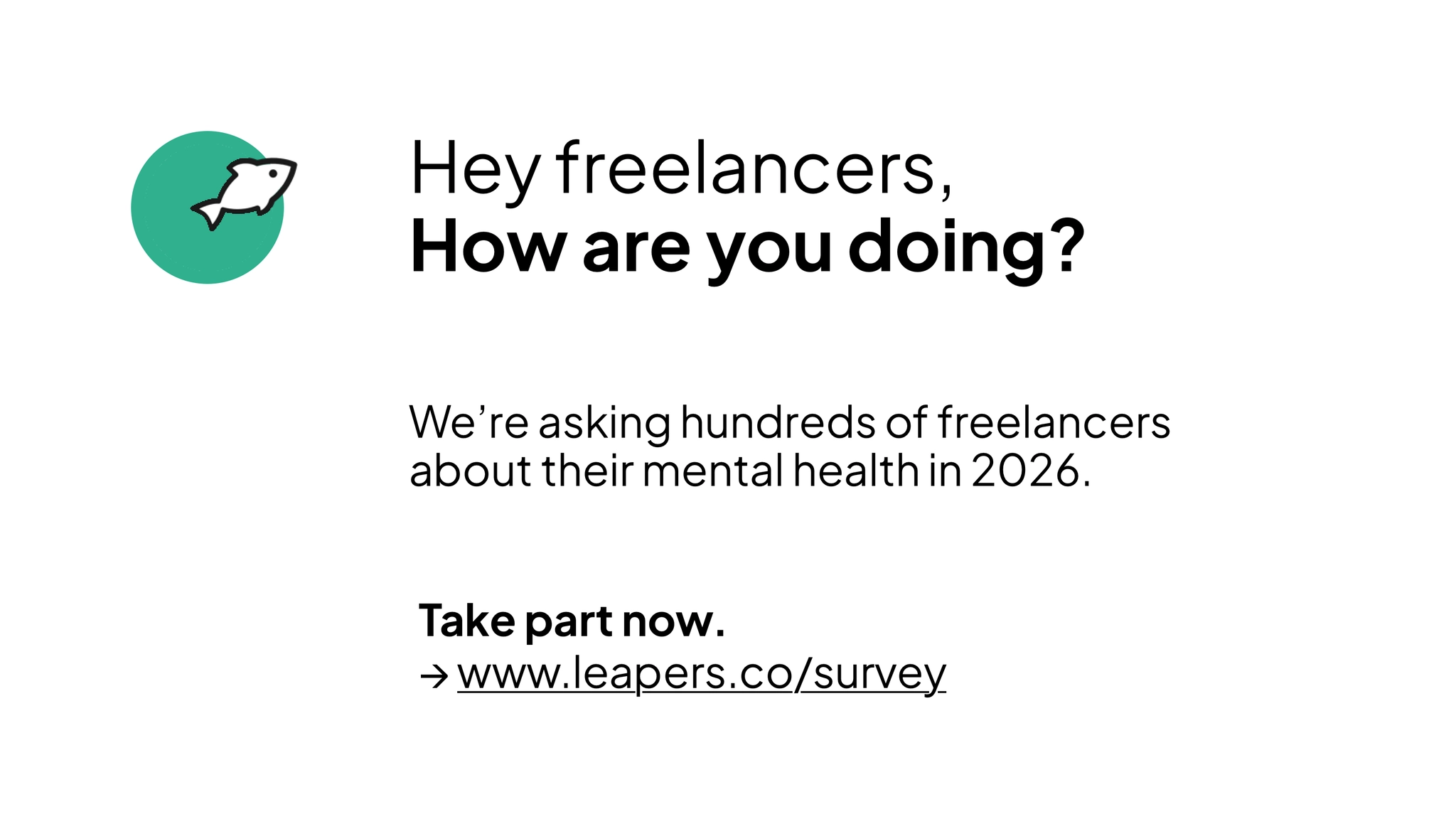
We ask exactly that in our annual survey, to highlight the common challenges and impacts to mental health at work for the self-employed. Take part in the survey to ask yourself the question, and I’ll be back here to share the results in January, along with some practical advice on what to put in place to take care of yourself.
Take part in the annual survey at www.leapers.co/survey
It’s completely anonymous and takes under 10 minutes to complete.
Author bio

Matthew Knight is Chief Freelance Officer and Founder at Leapers. His work has helped over 250,000 individuals through community, research and advocacy, as well as advising organisations who want to support their freelancers to work well.