Late Payment: International Comparative Legal & Regulatory Framework
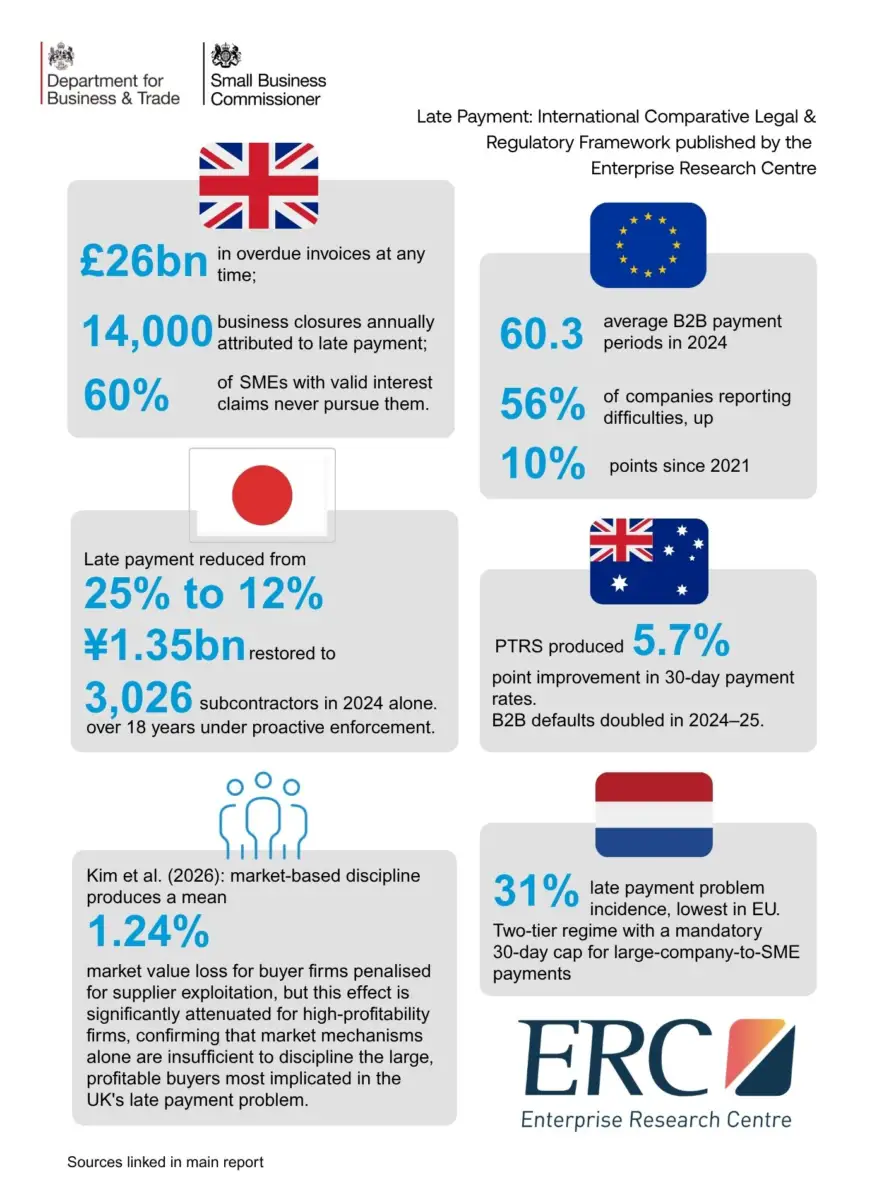
Late payment is fundamentally a structural power problem where big businesses can use their position to delay paying suppliers, effectively using them as a source of interest‑free finance. Although laws exist to protect suppliers, smaller firms often feel unable to use them. Many avoid claiming what they’re owed because they don’t want to risk damaging important business relationships.
Evidence from other countries shows that relying on businesses to take legal action themselves doesn’t work well. Systems where regulators step in proactively are much more effective. For example, in Japan, regular inspections and strict penalty interest have helped reduce late payments over many years, without putting the burden on suppliers to complain. In some sectors, like construction, quick and low-cost dispute resolution has also helped improve payment behaviour.
Simply making payment data public can help to some extent, as it encourages better behaviour. But on its own, it doesn’t stop late payments, especially during tougher economic periods, unless it’s backed by clear rules and meaningful consequences.
The proposed UK legislative package for 2025–2026 is designed to address these historical failure modes through a multi-faceted approach. Key measures include a mandatory 60-day payment term cap, the removal of contractual opt-outs for statutory interest, and the expansion of the Small Business Commissioner’s powers to include proactive investigations and the ability to impose financial penalties. By combining mandatory obligations with accessible adjudication and board-level accountability, the framework aims to close the gap between legal rights and the practical reality of supply chain payments.